Self-operated, for liquids, gas and steam
The function of overflow valves (relief valves, pressure retaining valves) is, that the outflow of the medium at a set pressure, in which an existing back pressure or vacuum having no effect on the set over pressure (retaining pressure). The above listed items are characteristic for an upstream pressure regulator, by comparison to a normal safety valve. The safety valve is only a device to prevent a specific pressure from being exceeded (set pressure).
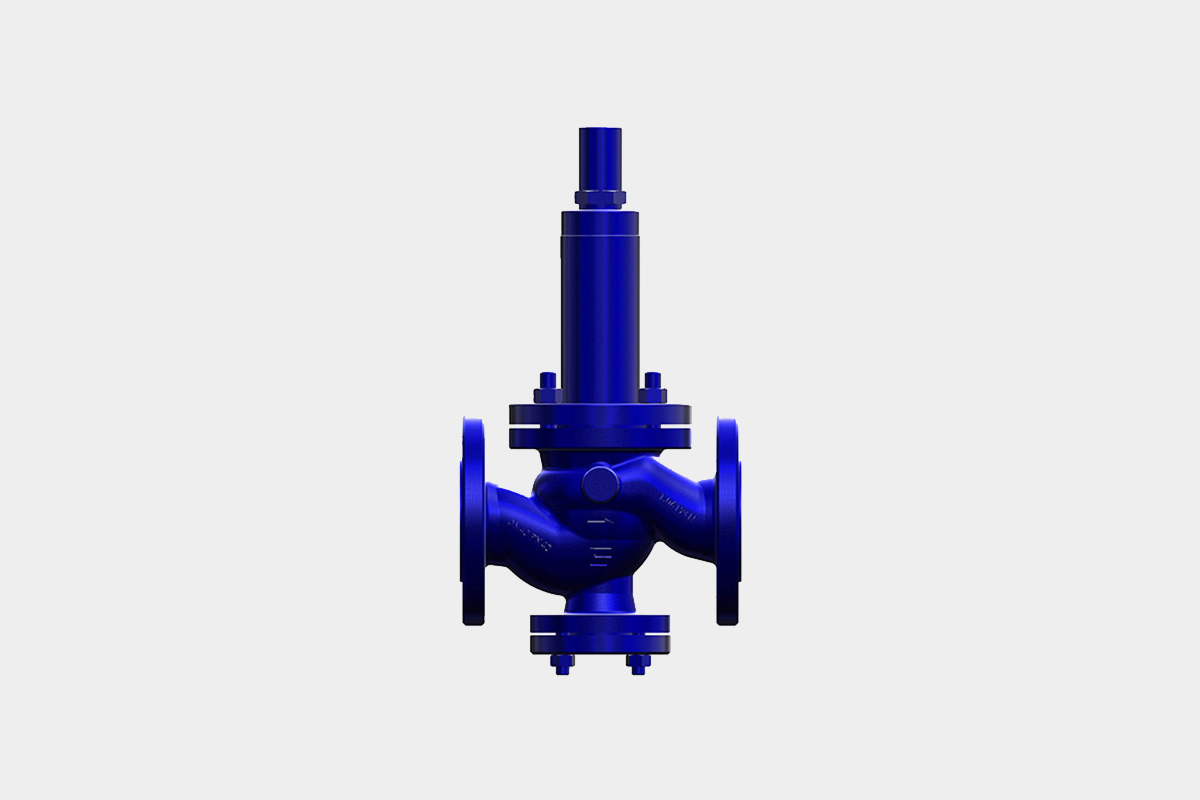
The overflow valve T27F is a single-seat valve and is especially suitable for incompressible media, for example waer, oil (lubrication oil, fuel oil, HFO, LFO, MGO), etc. The valves are fully relieved so that the back pressure has no effect on the set (overflow) pressure, only the flow quantity changes according to the pressure difference.
They are mainly used in pump circuits to keep a certain pressure constant.
The sealing between the guide sleeve and the cone takes place with a stainless steel bellow.
Overflow (relief) valves can be supplied with flanges, weld ends or threaded connections.